Cortisol: The Stress Hormone That’s Keeping You Tired, Stressed, and Holding on to Belly Fat
Have you ever looked in the mirror and wondered why your waistline seems to be growing even though your eating habits haven’t changed? Maybe you’ve been exercising, trying to eat healthier, and still can’t seem to lose that stubborn belly fat. If this sounds familiar, your body may be trying to tell you something.
One of the biggest hidden contributors to weight gain around the midsection is cortisol—often called the body’s primary stress hormone.
While cortisol is essential for life, too much of it for too long can create a cascade of health problems, including what many people refer to as “cortisol belly.”
What Is Cortisol?
Cortisol is a hormone produced by your adrenal glands, which sit on top of your kidneys. Its primary job is to help your body respond to stress. Thousands of years ago, cortisol helped humans survive dangerous situations by increasing energy, sharpening focus, and preparing the body for a fight-or-flight response.
Today, most of us aren’t running from predators. Instead, our bodies are reacting to constant everyday stressors like work deadlines, financial worries, relationship challenges, poor sleep, processed foods, inflammation, environmental toxins, and even overexercising.
The problem is that your body doesn’t distinguish between a charging bear and a stressful email. Stress is stress, and cortisol responds the same way.
What Does Cortisol Do?
Cortisol is involved in nearly every major system in your body. In healthy amounts, it helps:
- Regulate blood sugar
- Control blood pressure
- Reduce inflammation when needed
- Support metabolism
- Maintain energy levels
- Wake you up in the morning
- Help your body respond to physical and emotional stress
- Support immune function
Without cortisol, you couldn’t survive. The goal isn’t to eliminate cortisol—it’s to keep it balanced.
Why Does Cortisol Become Elevated?
Your body was never designed to live in a constant state of stress.
When stress becomes chronic, cortisol can remain elevated throughout the day. Some of the most common causes include:
- Chronic emotional stress
- Poor or insufficient sleep
- Blood sugar imbalances
- Diets high in sugar and processed foods
- Chronic inflammation
- Digestive issues and poor gut health
- Nutrient deficiencies
- Overtraining or excessive exercise
- Excess caffeine
- Environmental toxins
- Chronic pain
- Hormonal imbalances
Over time, your adrenal glands are constantly being asked to produce cortisol, leaving your body stuck in survival mode instead of healing mode.
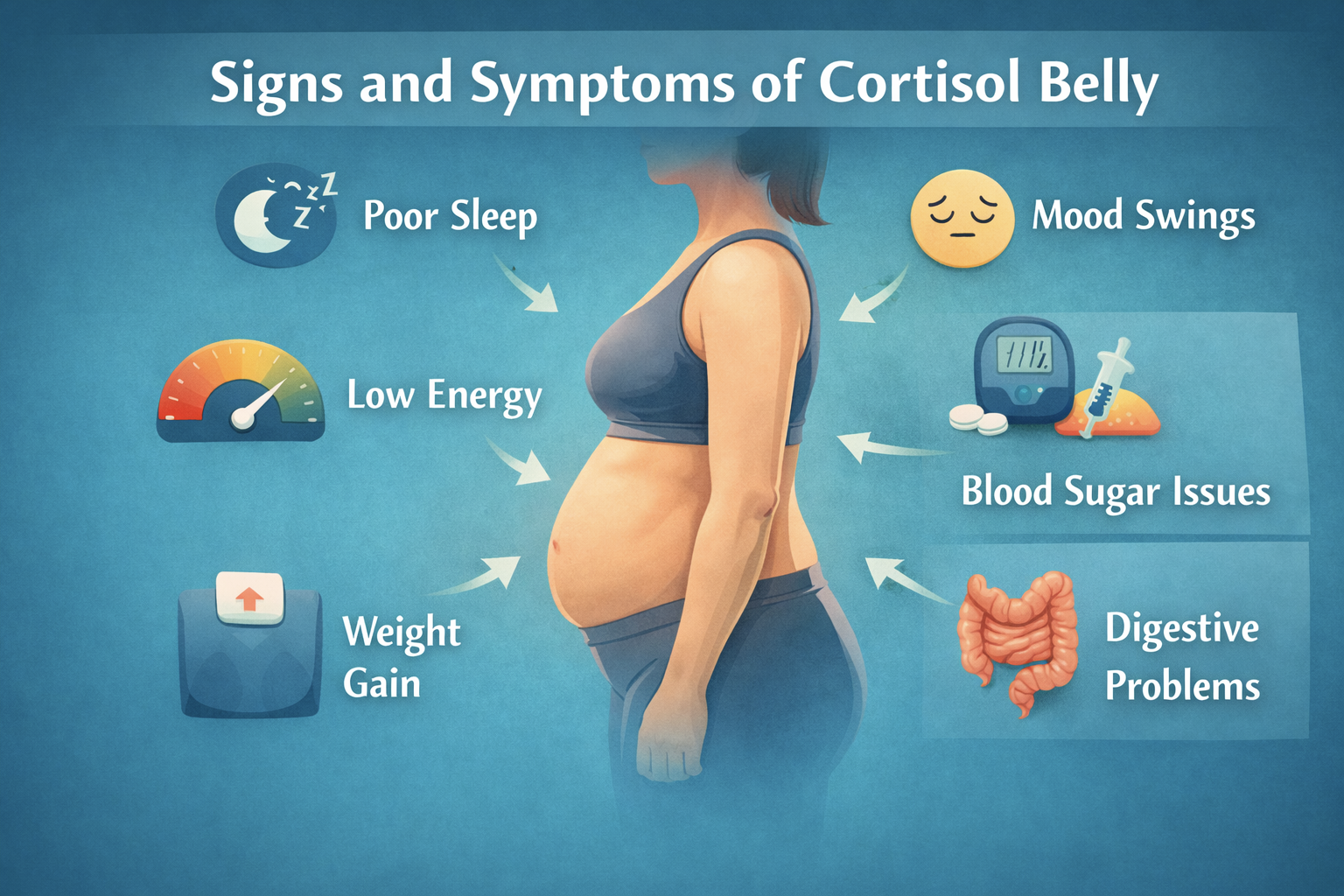
What Is “Cortisol Belly”?
One of cortisol’s jobs is to ensure your body has enough energy during stressful situations by raising blood sugar. When cortisol remains elevated for long periods, your body releases more insulin to help move that sugar into your cells.
Repeated spikes in cortisol and insulin encourage your body to store fat—especially around your abdomen.
This type of weight gain is often called “cortisol belly.”
Abdominal fat isn’t simply a cosmetic concern. Visceral fat surrounds your internal organs and is associated with increased inflammation, insulin resistance, metabolic dysfunction, cardiovascular disease, and type 2 diabetes.
Many people become frustrated because they continue dieting or exercising harder, only to see little progress. The missing piece is often addressing the stress response that’s driving the weight gain in the first place.
Other Signs Your Cortisol May Be Out of Balance
High cortisol doesn’t just affect your waistline. It can also contribute to:
- Fatigue—even after sleeping
- Difficulty falling or staying asleep
- Brain fog
- Anxiety
- Feeling “wired but tired”
- Sugar and carbohydrate cravings
- Mood swings
- Decreased muscle mass
- Frequent illness
- Hormonal imbalances
- Low libido
- Digestive problems
- Elevated blood pressure
If several of these symptoms sound familiar, it’s worth looking beyond calories and exercise to understand what your body is trying to communicate.
The Root Cause Matters
Many people are simply told to “reduce stress.” While that’s good advice, it’s often not enough.
The real question is: Why is your body producing too much cortisol?
At The Health Improvement Center, we take a functional approach to finding those answers. Elevated cortisol is often a symptom rather than the primary problem.
We evaluate factors such as:
- Nutrition and blood sugar regulation
- Functional blood chemistry
- Sleep quality
- Inflammation
- Gut health
- Hormone balance
- Thyroid function
- Adrenal health
- Nutrient deficiencies
- Lifestyle habits
By identifying what’s placing stress on your body, we can develop a personalized plan designed to help restore balance naturally.
Supporting Healthy Cortisol Naturally
Healthy cortisol levels often begin with simple daily habits:
- Eat balanced meals with adequate protein and healthy fats.
- Keep blood sugar stable by limiting processed sugars.
- Prioritize 7–9 hours of quality sleep.
- Get morning sunlight to help regulate your circadian rhythm.
- Exercise regularly, but avoid overtraining.
- Practice stress-management techniques such as deep breathing, prayer, meditation, or spending time in nature.
- Stay hydrated.
- Address nutrient deficiencies and inflammation.
- Support gut health with a nutrient-dense diet.
Small, consistent changes often have a much greater impact than extreme diets or exhausting workout routines.
You Don’t Have to Live in Survival Mode
If you’re constantly exhausted, struggling with stubborn belly fat, feeling anxious, or simply don’t feel like yourself anymore, your body may be asking for help—not more punishment.
Cortisol is not the enemy. It’s an important hormone that protects you during times of stress. But when stress becomes chronic, your body can become trapped in a cycle that affects your metabolism, hormones, energy, and overall health.
The good news is that your body has an incredible ability to heal when it’s given the right support.
At The Health Improvement Center, we focus on uncovering the root causes behind elevated cortisol rather than simply treating the symptoms. Through Functional Nutrition, Functional Blood Chemistry Analysis, Applied Kinesiology, and personalized wellness plans, we help you understand what your body is telling you and create a plan to restore balance naturally.
You don’t have to accept fatigue, stubborn belly fat, or feeling overwhelmed as your new normal. Your body was designed to thrive, and with the right guidance, you can begin feeling like yourself again.
~Dr. Katie
Owner of The Health Improvement Center